
Most founders think SEO takes forever because that is what they usually see in the market. They see scattered blogs, broad targeting, half-done on-page work, and months of activity that do not really change business visibility in any meaningful way. So they start assuming organic growth is naturally slow, uncertain, and mostly out of their control.But that is not always the truth.When we worked on Dariaan at PreCrux, the opportunity was actually very clear. This was not a case where the market had no demand, or where the category was too crowded to enter. The real issue was that the category had not yet been owned properly, and because of that, the right brand with the right execution could move much faster than most people would expect.
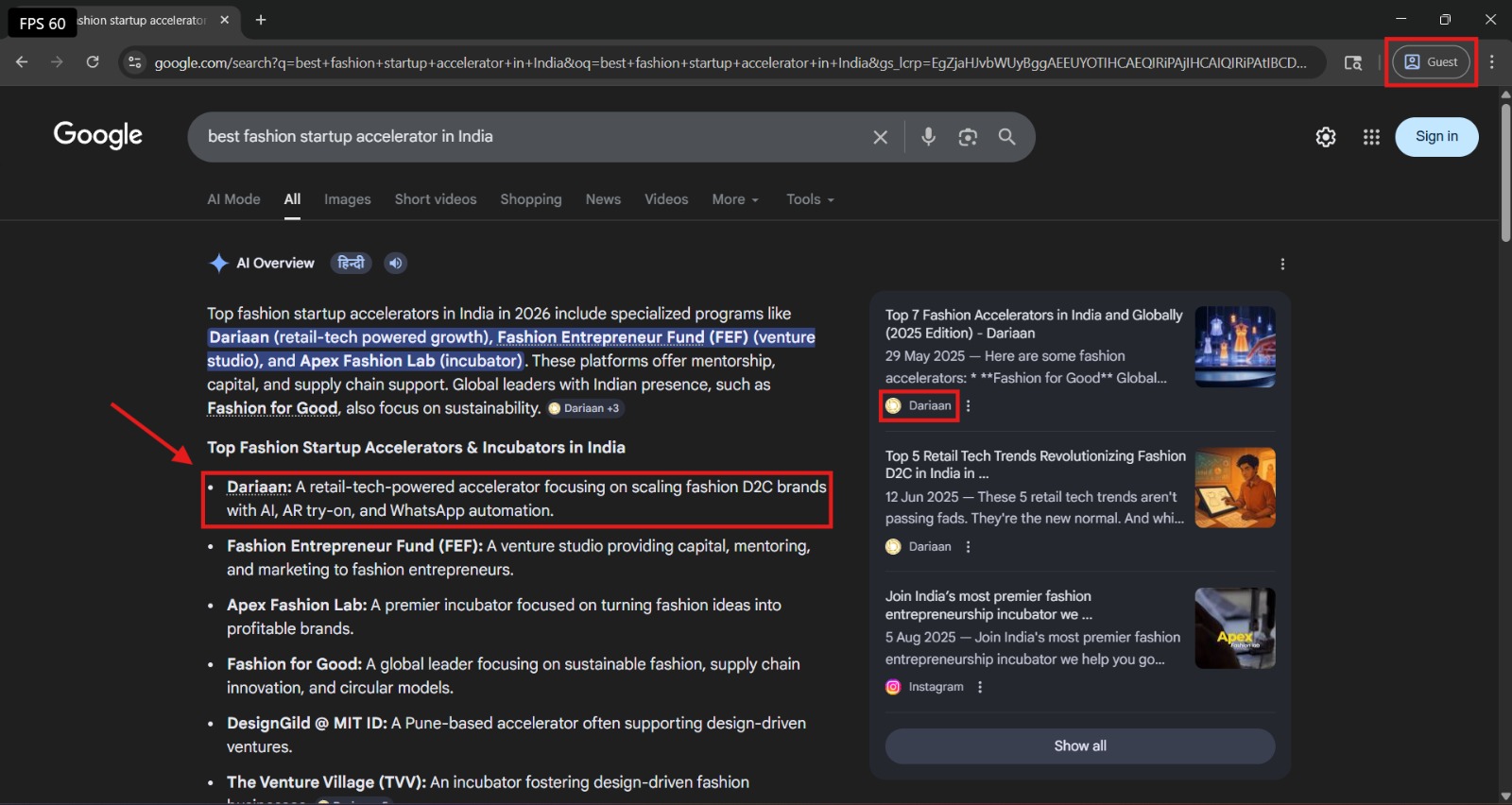
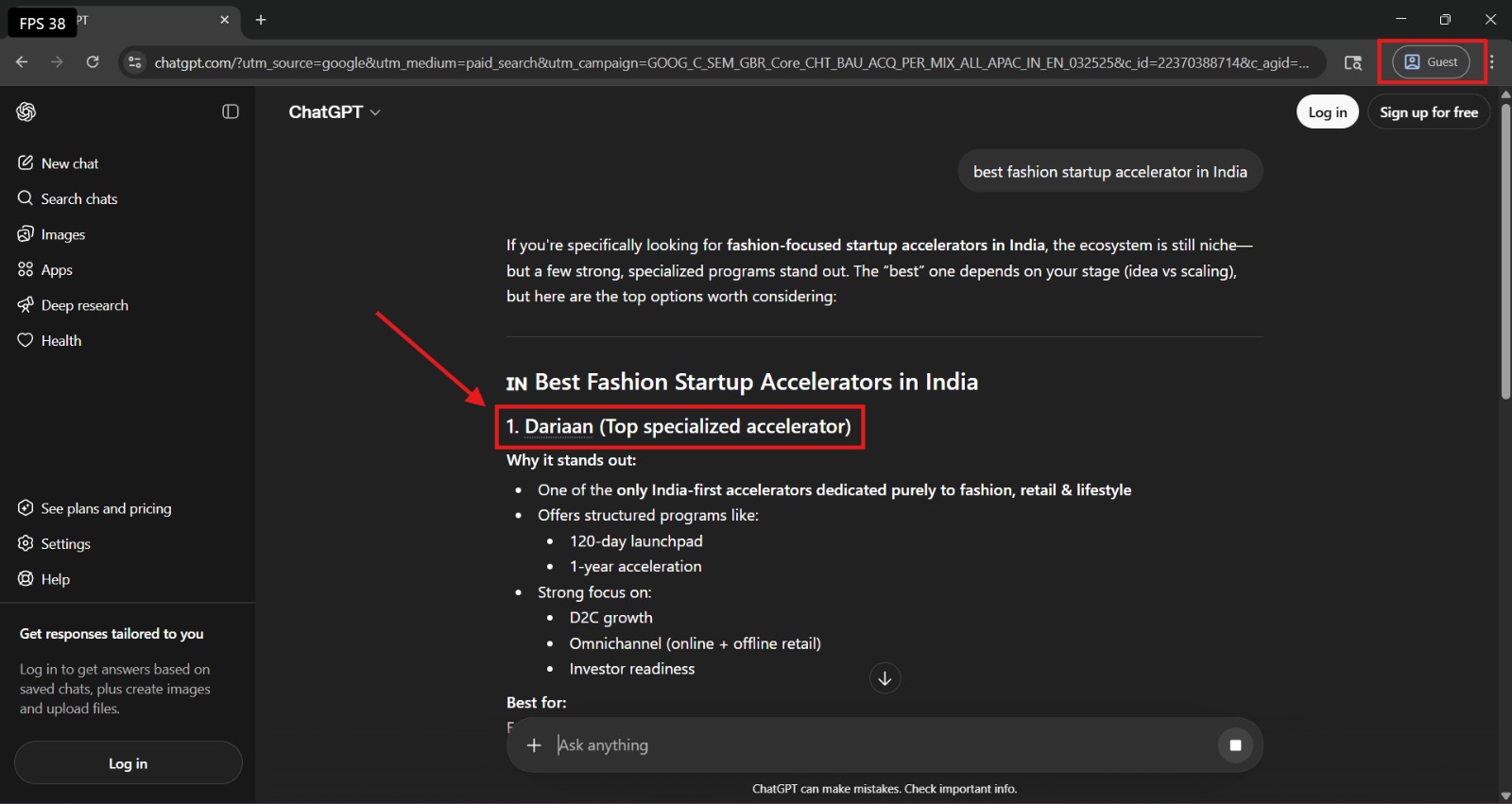
That is exactly what happened.
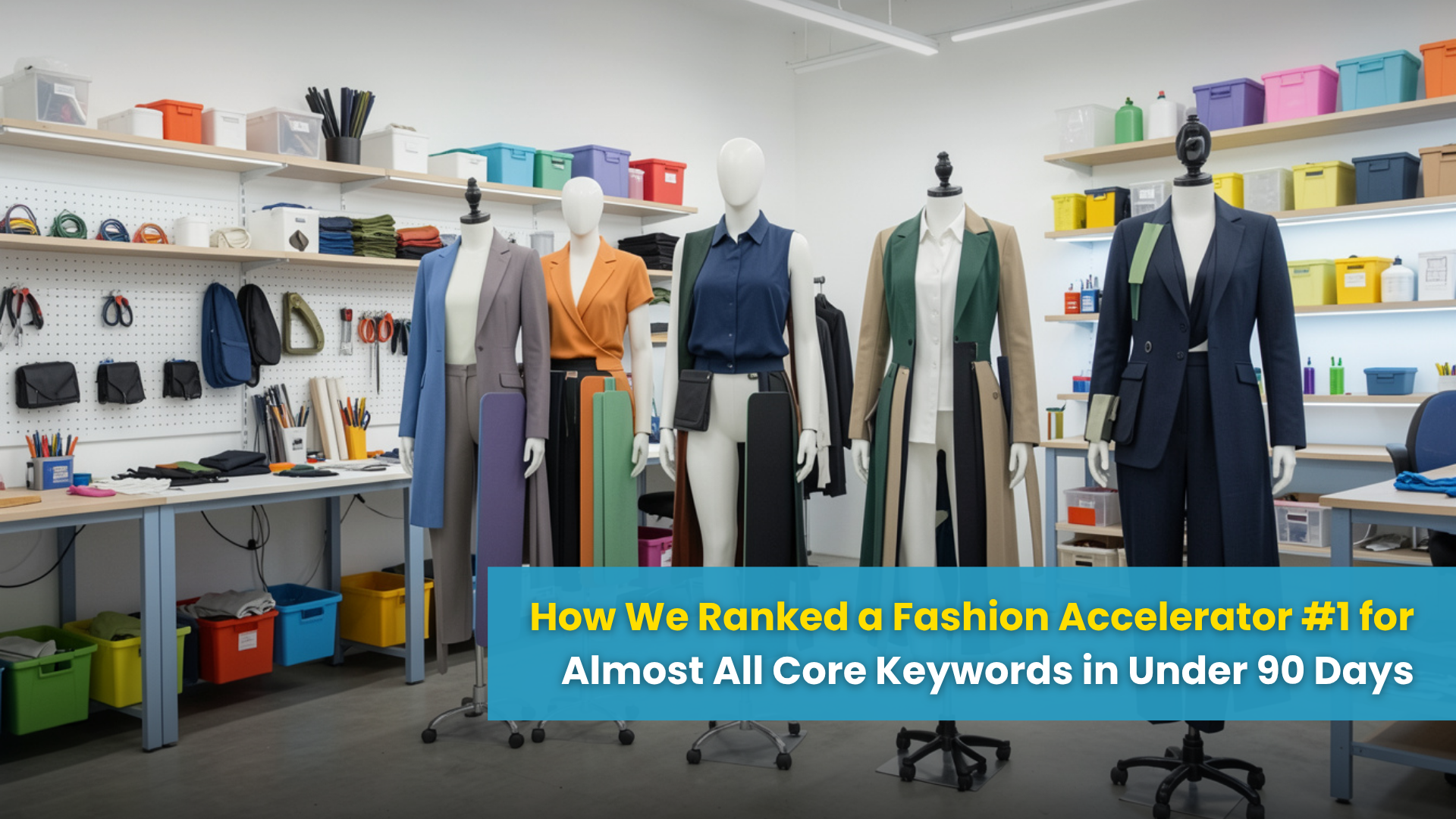
In under 90 days, we helped rank a fashion accelerator #1 for almost all of the core keywords that mattered in that space. And the reason this worked is not because we published random content faster than everyone else, or because we got lucky with one ranking spike. It worked because the positioning, the page ownership, the keyword direction, and the supporting SEO execution all started pointing in the same direction.This blog is not just a result story. It is a breakdown of how we approached the opportunity, what we saw before touching anything, what we changed first, and what founders can learn from this if they are trying to own a meaningful category instead of just chasing loose traffic.
Why This Category Was Worth Winning in the First Place
Before we talk about rankings, it is important to talk about category value.
There is a big difference between ranking for a broad informational keyword and ranking for a category-defining term. Informational keywords can bring visitors, yes, but category-defining keywords shape perception. They make searchers feel that your brand belongs in a space, and in many cases they make you look like the obvious answer before a founder has even clicked.
That was the bigger play here.
The opportunity around the fashion startup accelerator was not just about getting impressions. It was about becoming the brand people associated with that category. And when you are building authority in a niche like this, that matters a lot more than chasing traffic for the sake of traffic.
In India especially, this was an even sharper opportunity because the field was not deeply contested. There was room to move. There was room to define the category more clearly. And there was room for a brand to stop looking like one option among many, and start looking like the answer people were expecting to find.
So from the beginning, our goal at PreCrux was not just, let us get this brand more visibility. The real goal was, let us help this brand own a meaningful search position in a niche where search perception could influence authority, trust, and inbound interest all at once.
What We Saw Before We Touched Anything
Whenever we work on growth at PreCrux, we try to separate noise from the actual problem. Because if you misdiagnose the issue, even good execution starts going in the wrong direction.
In this case, what we saw was not a market problem. The market was there. The search opportunity was there. The intent was there. The bigger problem was clarity.
The category itself had room, but the signal needed to be tightened. Google needed stronger reinforcement around what the brand stood for, what page should own what intent, and how the supporting ecosystem around the main positioning should work together.
A lot of brands stay stuck because they think SEO is mainly about adding more pages and more blogs. But in reality, if the search engine cannot clearly understand what category you belong to, what page deserves to rank for that category, and how the rest of the site supports that relevance, then growth becomes slower than it needs to be.
That is what mattered here.
We also knew this could not become a vanity SEO project. Ranking alone was not enough. If the right people landed on the page and still felt confused, or if the page did not build trust fast enough, then the ranking win would not translate into category strength. So from the start, the work had to serve both search clarity and founder-facing credibility.
What Success Needed to Look Like
One of the mistakes people make in SEO case studies is that they define success too loosely. They say rankings improved, impressions grew, or traffic moved up, and they treat that as enough.
That was not the standard here.
Success needed to look like category ownership.
That meant we were not chasing one lucky keyword jump. We wanted the brand to rank across the core keyword basket that actually defined the space. We wanted the site language and page structure to reflect that category clearly. And we wanted the visibility to feel earned and stable, not accidental.
For us, the win would only matter if it did a few things together:
- strengthened the brand’s relevance around fashion startup accelerator
- improved ranking consistency across the core terms that mattered
- made the search result feel aligned with what founders were actually looking for
- supported trust once people landed on the site
- turned a narrow but valuable search space into a real authority wedge
That is a much better way to think about SEO, because it keeps the focus on business positioning, not just movement in a tool.
Our 90-Day Execution Plan
We did not treat this like a blogging sprint. We treated it like a structured category-ownership project.
Phase 1: Tightening the Positioning and Keyword Map
The first thing we needed was clarity on keyword ownership.
A lot of sites weaken themselves because they let multiple pages compete loosely around the same intent, or because they try to target a category from vague copy that never fully commits to the language the market is actually using. So one of the earliest priorities was making sure the right term had a clear home, and that the broader page ecosystem was not diluting that signal.
This is where many SEO efforts get slowed down. Brands often think the problem is that they do not have enough content, but the real problem is that their existing structure is not giving Google a clean answer. We focused first on making that answer much cleaner.
Phase 2: Strengthening the Core Pages
Once the ownership direction was clear, the next step was strengthening the core pages so that they actually deserved to rank for the category they were trying to own.
This meant improving relevance, refining copy direction, tightening heading logic, and making sure the page spoke both to search intent and to the actual founder mindset behind that query. Because when someone lands on a page around a term like fashion startup accelerator, they are not just asking for a definition. They are trying to understand whether this brand is credible, relevant, and worth trusting.
So the page needed sharper clarity, stronger message alignment, and a better balance between positioning and discoverability.
Phase 3: Building Supporting Relevance Around the Core Category
One page rarely wins a category by itself.
Even when one page is the main target, the surrounding content and internal relevance signals matter. That is where supporting content and contextual reinforcement became important. We needed the site to stop looking like one page making a claim in isolation, and start looking like a brand that genuinely belonged to the space it wanted to own.
This is where support content matters, but only when it is strategic. Not every blog helps. Not every new page builds authority. The supporting layer only works when it strengthens the main category instead of drifting into unrelated topics just to increase page count.
Phase 4: Improving the Site’s Ability to Support Rankings
Beyond the main content work, we also had to make sure the broader site environment could support progress.
This part is often less glamorous, but it matters a lot. Search performance is not built only through copy. It is also shaped by how well the site allows authority to flow, how clearly pages relate to each other, how easy it is for search engines to understand the structure, and how well users can move through the experience without friction.
When we work at PreCrux, we do not separate these layers too rigidly because real growth does not happen in silos. The better the overall support system is, the more efficiently the core page can move.
Phase 5: Monitoring, Adjusting, and Consolidating
SEO is not just publishing and praying. Once momentum starts building, the next job is to make sure it consolidates.
As the movement came in, we kept refining what needed reinforcement, what signals were working fastest, and where the page ecosystem needed further support. That iterative layer matters because a ranking gain is useful, but a ranking gain that starts to settle into broader authority is far more valuable.
What Actually Moved the Needle in the First 90 Days, And What Would Have Wasted Time
This is the section most founders actually need, because this is where theory stops and leverage starts.
A lot of things can be done in SEO. Very few of them matter equally in the early phase of a category play.
Here is what moved the needle for us, and just as importantly, what would have wasted time.
What moved the needle
- Clear keyword ownership
Once the right page clearly owned the right intent, progress became much easier. Google responds much better when the site stops sending mixed signals.
- Positioning and SEO working together
This was not just an optimization project. The brand message and the search language started reinforcing each other, and that made the category signal stronger.
- Support content with a purpose
We did not treat blogs as decorative assets. We used supporting relevance to strengthen the category, not to fill the site with activity.
- Internal linking with intent
Internal links matter far more when they are used to clarify relationships and pass authority properly. Random linking rarely helps as much as deliberate linking.
- Execution sequence
We did not try to fix everything everywhere at once. We focused on what had the highest leverage first, and that is often what shortens the time to visible results.
What would have wasted time
- publishing random low-intent blogs just to look active
- stuffing broad keywords into multiple pages
- trying to target every related term from one page
- expanding into too many directions before the core category was stable
- treating SEO as a content volume game instead of a positioning and execution game
This is one of the biggest lessons from the project. Fast movement usually does not come from doing more. It comes from doing the right things in the right order.
The Results We Saw in Under 90 Days
This is one of the biggest lessons from the project. Fast movement usually does not come from doing more. It comes from doing the right things in the right order.
This is one of the biggest lessons from the project. Fast movement usually does not come from doing more. It comes from doing the right things in the right order.
This is one of the biggest lessons from the project. Fast movement usually does not come from doing more. It comes from doing the right things in the right order.
This is one of the biggest lessons from the project. Fast movement usually does not come from doing more. It comes from doing the right things in the right order.
This is one of the biggest lessons from the project. Fast movement usually does not come from doing more. It comes from doing the right things in the right order.
The Results We Saw in Under 90 Days
The result was exactly what we were aiming for: the fashion accelerator ranked #1 for almost all of the core keywords that mattered in that category within 90 days.
But the ranking itself was only part of the story.
What mattered more was what that ranking represented. It showed that the category was ownable. It showed that focused execution could move faster than most people assume. And it showed that when a brand’s positioning, page structure, keyword direction, and supporting relevance line up properly, a niche authority play can turn into visible search dominance much quicker than scattered SEO ever will.
This also mattered commercially because category ownership builds a different kind of trust. Founders do not just see traffic numbers. They see relevance. They see authority. They see a brand that appears exactly where it should appear.
That perception shift is hard to measure in one neat graph, but it is a huge part of why these wins matter.
What Founders Can Learn From This Case Study
A lot of founders think growth comes from covering more ground. Sometimes it does. But very often, the smarter move is to own one meaningful category first.
That is the real lesson here.
You do not need to rank for everything at once. You need to identify the category that actually matters to your market, and then build a site and content system that makes search engines and users understand that you belong there.
A few practical takeaways stand out:
- the right keyword is often more valuable than the biggest keyword
- category ownership can create stronger authority than loose top-of-funnel traffic
- SEO works faster when the market message is sharp
- execution order matters more than founders usually expect
- random blog publishing is not a growth system
This is also why we keep saying at PreCrux that growth execution matters more than scattered activity. A business can be working hard and still stay invisible if its message, pages, and search strategy are not aligned.
When This Kind of SEO Play Works, And When It Does Not
It is also important to be honest about context.
A fast category win like this works best when the opportunity is real, the category is meaningful, the site has a clear page that can own the intent, and the execution is focused enough to reinforce that signal quickly.
It becomes much harder when the brand itself is vague, when every page tries to target everything, when there is no clear structure behind the content, or when founders want authority without putting in the work to build relevance properly.
That matters because case studies become dangerous when they imply that the same result happens in every situation the same way. It does not.
The lesson is not that every brand can rank in under 90 days. The lesson is that when the category opportunity is right, and when execution is not diluted, meaningful movement can happen much faster than most people think.
Why This Matters to the Way We Work at PreCrux
This case reflects something deeper about how we work.
We do not look at SEO as a blog factory. We do not look at growth as a collection of disconnected channels. And we do not believe in doing activities for the sake of appearing busy. Our approach at PreCrux is to identify what the business should actually own, what search and conversion path support that goal, and what sequence of execution will move the brand there most efficiently.
That is why projects like this matter to us. Not because one ranking looks impressive, but because it proves what connected execution can do when the objective is clear.
For ambitious founders, that difference matters a lot. Because most growth problems are not caused by a total lack of effort. They are caused by effort being spread too thin, pointed in too many directions, or disconnected from the category the business should be owning first.
Final Thoughts
This was never just a story about ranking a fashion accelerator.
It was a story about category ownership, and about what becomes possible when a brand stops chasing scattered visibility and starts aligning its positioning, page strategy, and SEO execution around one meaningful commercial lane.
That is why this result matters.
In under 90 days, we did not just improve rankings. We helped turn an open search opportunity into a visible authority position. And for founders, that is the bigger takeaway. You do not always need more channels, more pages, or more activity. Sometimes you need sharper focus, stronger execution, and a much clearer understanding of what category your brand should be the obvious answer for.
If your business is sitting close to a category it should already be owning, but the search visibility still is not reflecting that, then the problem may not be lack of potential. It may simply be that the execution has not lined up properly yet.
That is exactly the kind of gap we like solving at PreCrux.